Every major deal in India passes through a room. Today, that room is usually digital: a data room or file-sharing platform where bankers, lawyers, auditors and buyers exchange the most sensitive documents a company will ever produce.
There is an uncomfortable truth behind most of these platforms. The vendor running them can, in principle, read everything inside. The files are encrypted, yes, but the vendor holds the keys. Customers are asked to trust that nobody on the other side will look, leak, or be compelled to hand data over.
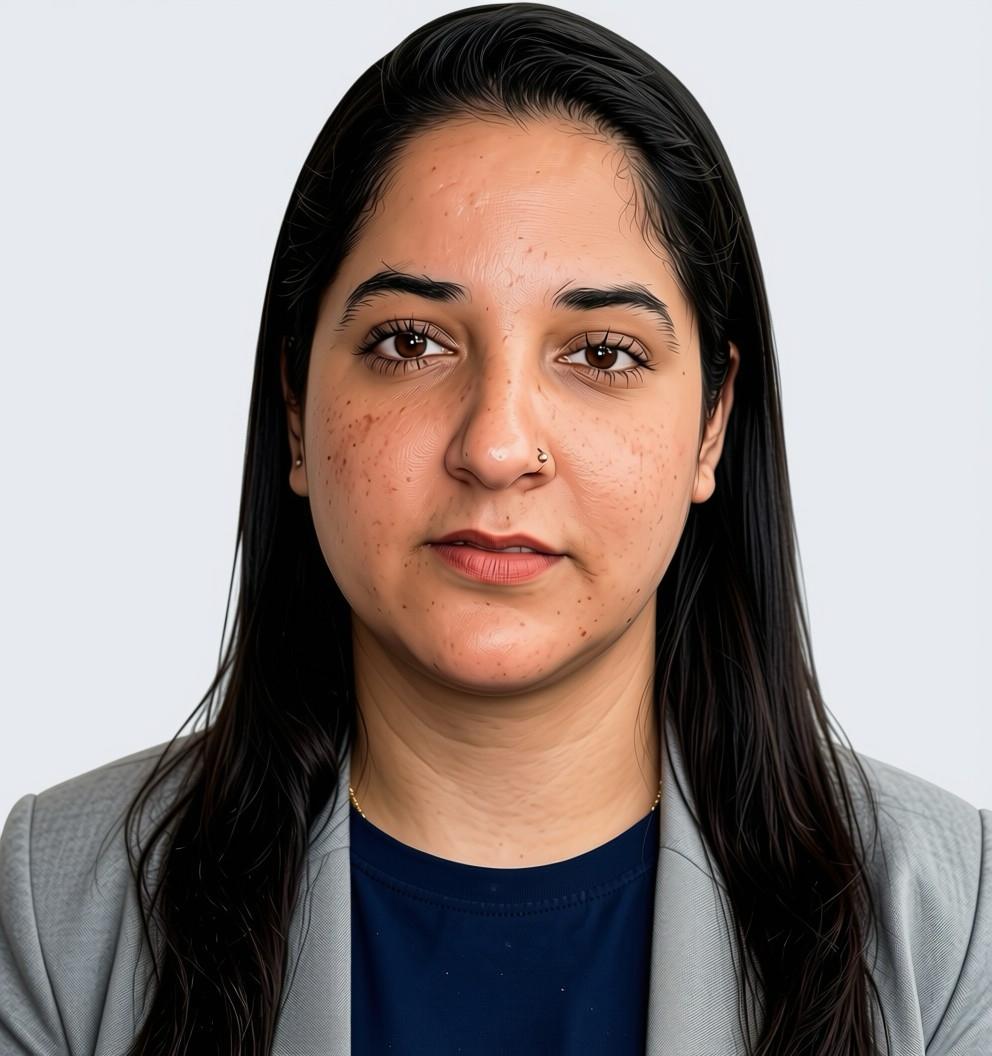
Masarat Majeed, co-founder and director of Kvelden, asks a different question: "What if you didn't have to trust us at all?" That shift, from trusting the vendor to not needing to, is the foundation of Kvelden's first product, Enclave.
The Problem Hiding in Plain Sight
Kvelden did not start with a business plan. It started inside enterprise security, with years of hands-on work on the systems that banks and large organisations use to protect their encryption keys.
Again and again, the same gap showed up. Organisations invested heavily in protecting data inside their own walls. But the moment that data had to be shared with someone outside – a merger counterparty, an external law firm, an auditor, a regulator – it moved onto platforms where the organisation no longer controlled the keys.
"The most sensitive work happens between organisations, not inside them," says Majeed. "That is exactly where control is weakest. You are trusting a vendor's promise instead of the maths."
For M&A advisers and transactional law firms, that gap is not theoretical. A leaked deal document can move markets, collapse a transaction, or end a client relationship. Yet the tools used to share those documents often treat the vendor as a trusted insider by default.
What Is Kvelden Enclave?
Enclave is a secure collaboration platform built for people who need to work together across organisational boundaries without handing control of their data to anyone else, including Kvelden.
It is built on one belief: security should be provable, not promised. Enclave rests on three pillars:
1.Zero-knowledge by design — In Enclave's zero-knowledge rooms, files are encrypted on the user's own device with AES-256-GCM before they are uploaded. Kvelden's servers only ever store encrypted data, so Kvelden cannot read what its customers share.
2.Your keys, your control — With Bring Your Own Key (BYOK), available on both the managed cloud service and the virtual appliance, customers keep their master keys in their own hardware security module (HSM) or key management service. If a customer revokes access, their data becomes unreadable to everyone, Kvelden included.
3.Deploy where your rules require — Enclave runs as a managed cloud service hosted in India (AWS Mumbai region) or as a virtual appliance that customers run entirely inside their own environment, including fully air-gapped networks with no internet connection.
Every action inside Enclave is recorded in a tamper-evident audit log, so compliance teams can prove who accessed what and when.
"Most platforms ask customers to trust their policies," Majeed says. "We wanted to build something where trust is enforced by the architecture itself."
Why Now?
The timing is not an accident. India's regulatory landscape is shifting fast, and it is shifting towards exactly the kind of control Enclave was built to provide.
The Digital Personal Data Protection (DPDP) Rules place clear obligations on how organisations handle personal data. SEBI's Cybersecurity and Cyber Resilience Framework (CSCRF) raises the bar for market participants. The RBI's latest directions tighten expectations on regulated entities and the vendors they rely on. Across all of them, the direction is the same: organisations must be able to show where their data lives, who can access it, and who controls the keys.
"For years, data sovereignty was a checkbox," says Majeed. "Now regulators are asking organisations to prove it. You cannot prove control over data that your vendor can read."
Kvelden is focusing first on M&A advisory firms, transactional law firms and the wider banking, financial services and insurance (BFSI) sector, where the stakes of a leak are highest and regulatory pressure is strongest.
The Team Behind Kvelden
Kvelden's team of cybersecurity experts brings deep, hands-on experience with the HSM and key management systems that large enterprises already run. Enclave's core, from the encryption layer and key management integrations to single sign-on and access control, was engineered in-house rather than assembled from off-the-shelf parts. The team is led by co-founder and director Masarat Majeed, an MBA who drives Kvelden's business strategy and growth.
That background shapes how Kvelden talks about security. The company makes precise, checkable claims rather than broad promises. "In security, overclaiming is the fastest way to lose trust," Majeed says. "If we say something, there should be a test behind it."
Kvelden Enclave also integrates with the tools enterprises already use, including enterprise HSMs and key management services, and identity providers through SAML 2.0 and OIDC single sign-on, so security teams do not have to rebuild their stack to adopt it.
What Comes Next
Kvelden Enclave is available today as a managed cloud service, and the virtual appliance becomes generally available on 25 December 2026. India is Kvelden's first market. After India, the company plans to expand into the Middle East, starting with the UAE, where data sovereignty rules are creating similar demand.
Kvelden is also built for the next shift in security: quantum computing. Data stolen today could be decrypted years from now once quantum computers mature. Kvelden's virtual appliance is quantum-ready from launch, built on the new NIST post-quantum cryptography standards, so data that must stay confidential for decades is protected against tomorrow's threats as well as today's.
Longer term, Kvelden sees a bigger opportunity: making it possible for organisations to use AI on their most sensitive data without ever exposing it.
"Indian businesses should not have to choose between collaboration and control," Majeed says. "When the vendor cannot see your data, you stop asking whether you can trust them. The question simply goes away."
About Kvelden
Kvelden is an Indian cybersecurity company building secure collaboration for regulated industries. Its flagship product, Kvelden Enclave, lets organisations share sensitive information across company boundaries with client-side encryption, customer-controlled keys, and deployment in India-hosted cloud or fully air-gapped environments. Learn more at kvelden.com.
Media enquiries: hello@kvelden.com