
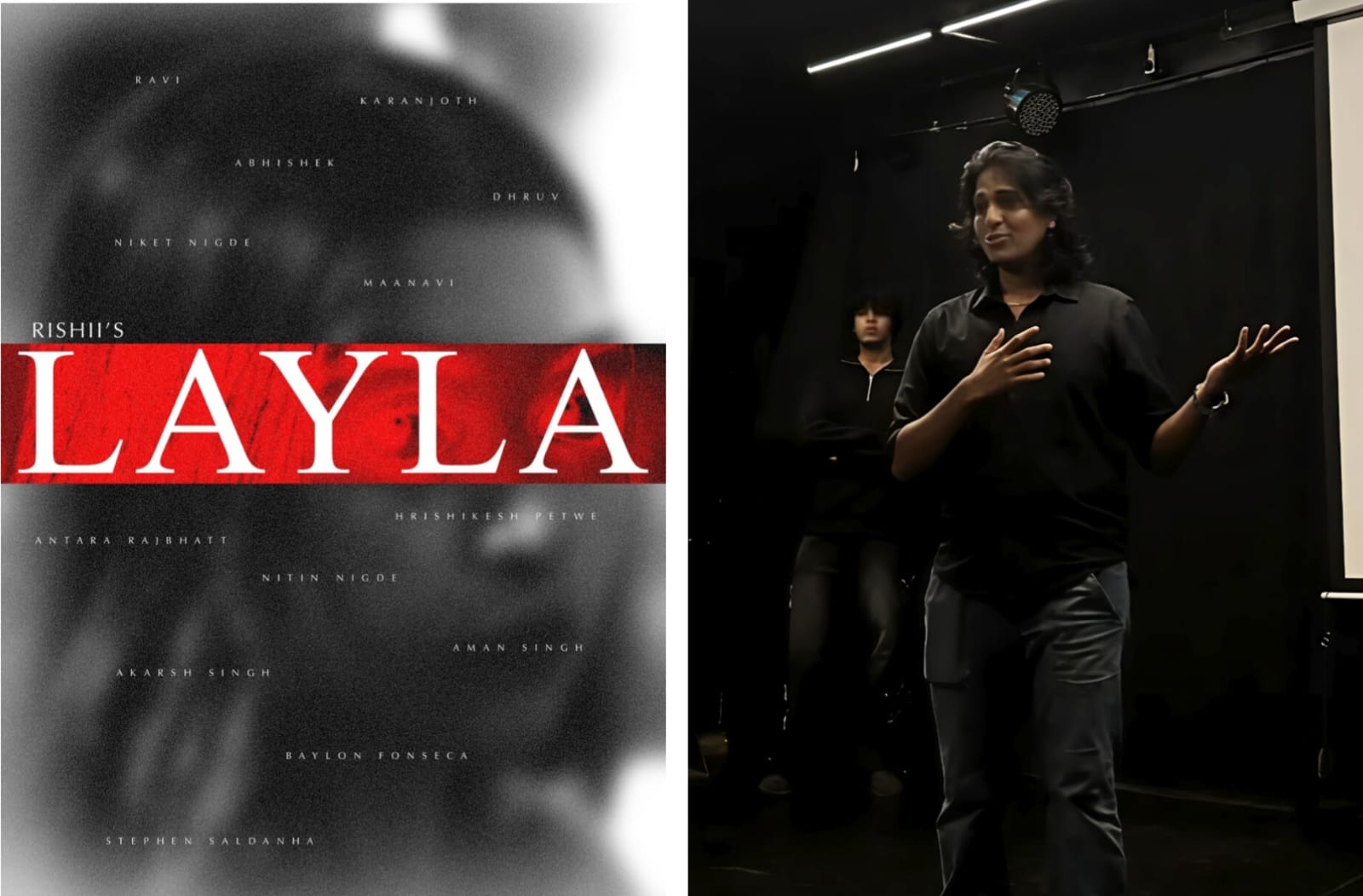
Indie filmmaker Rishikesh Nair in a conversation speaks about crafting Layla, a poetic exploration of freedom, madness, and the unpredictable beauty of Mumbai. With limited resources and limitless passion, Layla captures a raw world where the city becomes the film’s loudest character.
For director Rishikesh Nair, Layla began not as a fully formed narrative, but as an experiment. “I wanted to explore freedom and madness,” he says. Working with limited resources, the team focused on making something meaningful and letting the film evolve naturally.
At the center of Layla lies a striking question: how does society judge madness? Nair explains this through a simple metaphor: “If a man dances in the middle of the road, we call him unstable. But if you’re told he’s going to die in three days, how does that change your perception?” This shifting lens forms the emotional backbone of the film. Character creation was deliberate and intuitive. The Kafka-esque protagonist with a monotonous, despair-filled life was written specifically for actor Karan (Karanjot Singh) . In contrast, the character of Jerry needed someone bold and expressive — “Kabir (Kabir Saabran) fit perfectly,” Nair says.
Like many independent projects, Roses faced budget constraints. Yet this limitation turned into a creative advantage. “Everyone’s passion carried us,” Nair recalls. “The only real challenge was money, rest everything flowed.”
What sets the film apart are the spontaneous moments gifted by Mumbai itself. Nair describes several scenes where commuters, birds, and everyday city elements moved in perfect synchronicity. “It felt like they were planted there,” he says. “Mumbai contributed excessively, almost like another character.” Visually, the film adopts a docu-fiction approach, born out of necessity and vision. Technical recces led the team to hidden corners of the city that added depth to the film’s atmosphere. Surprisingly, Layla involved little formal research. “We reminded ourselves that we love cinema.
The mistakes would teach us,” Nair admits with a smile. He hopes audiences connect with the film in their own way. “Viewing is subjective. I just hope they don’t regret the 30 minutes they give us.”
Looking ahead, Nair is excited about expanding his team and developing larger projects. Layla, it seems, is just the beginning.
